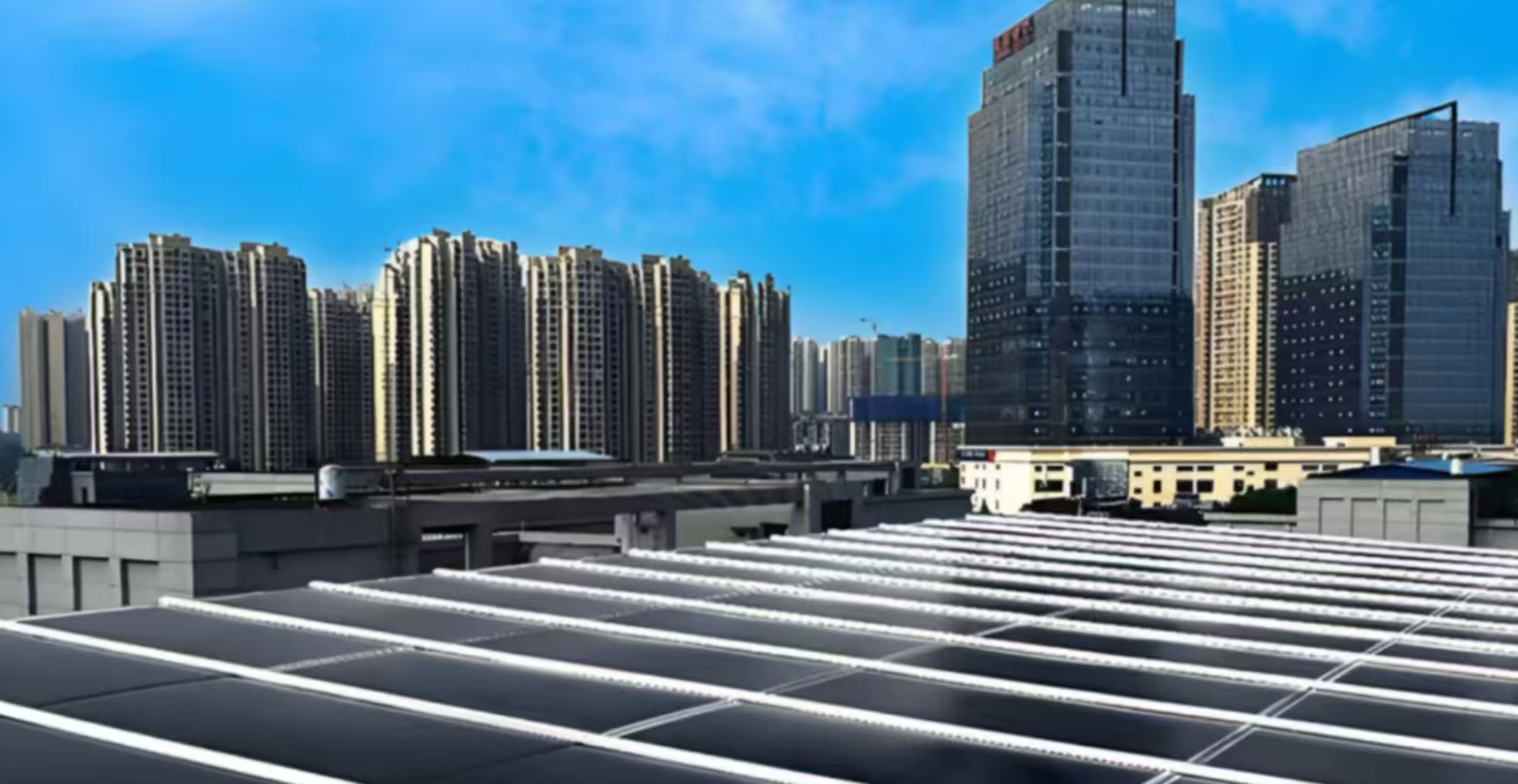
In my country, the building sector accounts for nearly one-third of the nation's total carbon emissions, making it a key battleground for carbon reduction. This high proportion stems not only from the production of building materials but also from the ongoing energy consumption during the building's operation throughout its lifecycle. Currently, the promotion of ultra-low-energy buildings, integrated photovoltaic design, and prefabricated construction technologies are becoming key breakthroughs in implementing the "dual carbon" strategy. However, achieving deep integration between buildings and photovoltaics presents three challenges for traditional technologies: the complexity of component installation and the limited functionality (lack of insulation and heat dissipation) hinder large-scale application; heat dissipation defects during operation lead to energy efficiency degradation; and insufficient structural sealing poses safety risks such as leaks.
Facing these industry challenges, Zoom Solar Green Energy, through continuous testing and research, has developed the Huading BIPV system solution specifically for industrial and commercial rooftop users. It meets building construction requirements for waterproofing, lightning protection, wind protection, thermal insulation, fire resistance, heavy load resistance, and aging resistance, while also offering high efficiency, reliability, and aesthetics. This truly enables photovoltaic building materials to replace traditional building materials in architectural applications, making "every inch of a future building generating electricity" a reality. From "addition" to "integration", Zoom Solar Green Energy's "Huading" BIPV insists on paying attention to every detail, providing users with better products and services, and completing the transformation from a "gray giant" to a "green carrier".
What is Huading BIPV?
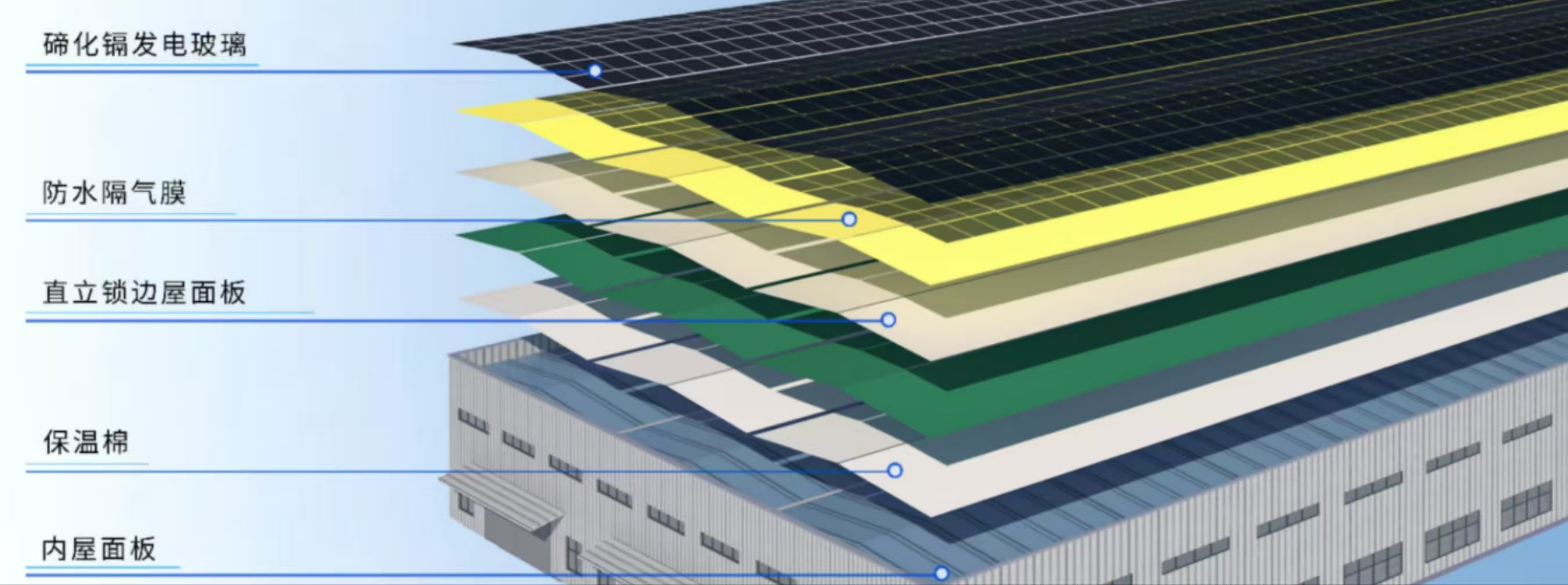
Huading BIPV offers a modular building panel system that provides a stable structure and easy installation, combining power generation, module heat dissipation, and building insulation. By leveraging innovative technology that deeply integrates photovoltaic power generation with building structure, and employing an integrated, prefabricated approach, it integrates the photovoltaic power generation system. This system is a complete, high-quality metal roof maintenance system that meets architectural design requirements. It encompasses the complete roof construction components, including purlins, inner panels, insulation, outer panels, and photovoltaic power generation layers, seamlessly integrating power generation and building functions.

Advantages of Huading BIPV
As a modular, energy-generating and thermally insulated building panel, what advantages does "Huading" BIPV offer over traditional building materials? Is it simply more environmentally friendly? Of course not; it also offers the following advantages.
1. Functional Integration Innovation
Integrated Building Materials and Power Generation: Products like cadmium telluride solar glass combine waterproofing, load-bearing, and power generation functions. They reduce building energy consumption through shading and insulation, increasing the value density of the space.
2. High Space Utilization Efficiency
Empowering the Building: Utilizing unused rooftop space for zero-footprint power generation overcomes urban land resource constraints and improves the overall efficiency of space compared to traditional power plants.
3. Significant Economic Benefits
Optimized Return on Investment: The self-generation and self-consumption model reduces grid dependence. Its 25+ year lifespan matches the building lifecycle, and in areas with high electricity prices, the cost recovery can be achieved within 5-8 years.
4. Energy Supply Independence
Multi-Scenario Adaptability: Low-power solar power generation technology overcomes geographical limitations. Coupled with energy storage systems, it provides off-grid power supply capabilities and enhances building energy resilience.
5. Fusion of Technology and Aesthetics
Parametric Customization: Products can be customized based on site requirements, with adjustable light transmittance and dimensions for optimal fit and integration with the building. Furthermore, prefabricated, standardized components facilitate transportation and installation, avoiding unnecessary damage.
Huading's BIPV's core competitiveness lies in its dual nature of "functional building materials + energy devices." This overcomes the single-function limitations of traditional roofs while reducing overall building lifecycle costs through energy self-sufficiency.
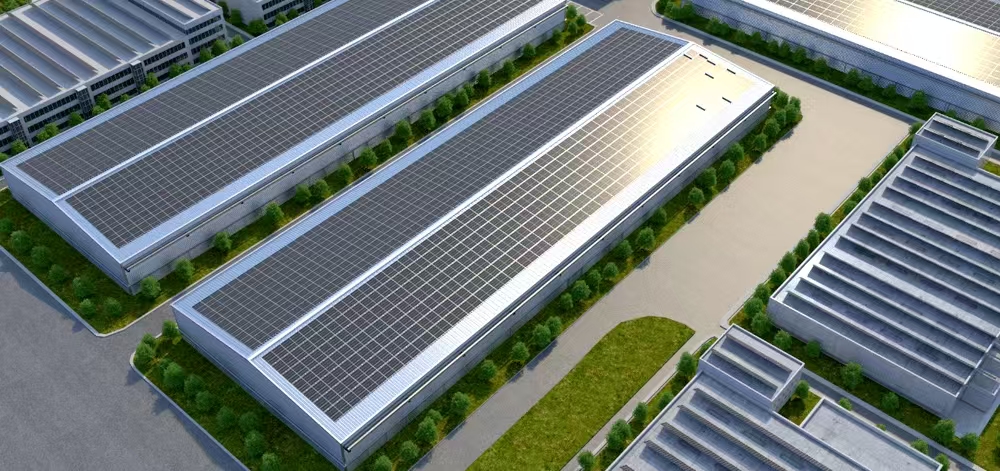
Of course, you might still have some concerns after reading this. As a new modular thermal insulation building panel, is "Huading" BIPV safe? Can it integrate seamlessly with the roof? These are all things users should and must consider.
Safety: The integration of a photovoltaic system must meet both structural and electrical safety standards. Module installation must ensure physical stability to withstand natural loads such as wind and snow and comply with structural design specifications. Furthermore, the electrical design must strictly adhere to safety regulations. From wiring layout, lightning protection and grounding to overload protection, every aspect must be precisely implemented to eliminate the risk of leakage and fire. The fire resistance of photovoltaic modules and connecting materials is a key indicator and must meet the building fire rating requirements to ensure comprehensive building safety.
Efficiency: This is our primary reason for choosing it. Cadmium telluride solar glass has excellent temperature coefficient and spectral efficiency. In hot climates and high humidity conditions, it can provide 4% more energy output annually, further enhancing its energy production advantage. In addition to high efficiency and stability, cadmium telluride solar glass also offers many advantages, including strong low-light power generation capabilities, large product area, low temperature coefficient, minimal hot spot effect, and high safety performance. These advantages enable CdTe solar glass to maintain excellent power generation performance in a variety of climates and installation environments.
Aesthetics and functionality: Its presence cannot compromise the core architectural experience; a quality product should deliver both substance and aesthetics. The precise control of transmittance and texture ensures that CdTe solar glass maintains the building's natural light requirements while seamlessly integrating with the design. It meets requirements for waterproofing, lightning protection, wind resistance, thermal insulation, fire resistance, heavy-duty load resistance, and aging resistance. Furthermore, it offers high efficiency, reliability, and aesthetics, ensuring optimal integration with the building.