Professor Moungi G. Bawendi's team at MIT published a research paper titled "Spontaneous formation of robust two-dimensional perovskite phases" in the journal Science. Shaun Tan of MIT is the first author of the paper, and Moungi G. Bawendi of MIT and Kai Zhu of the U.S. National Renewable Energy Institute are the co-corresponding authors of the paper.
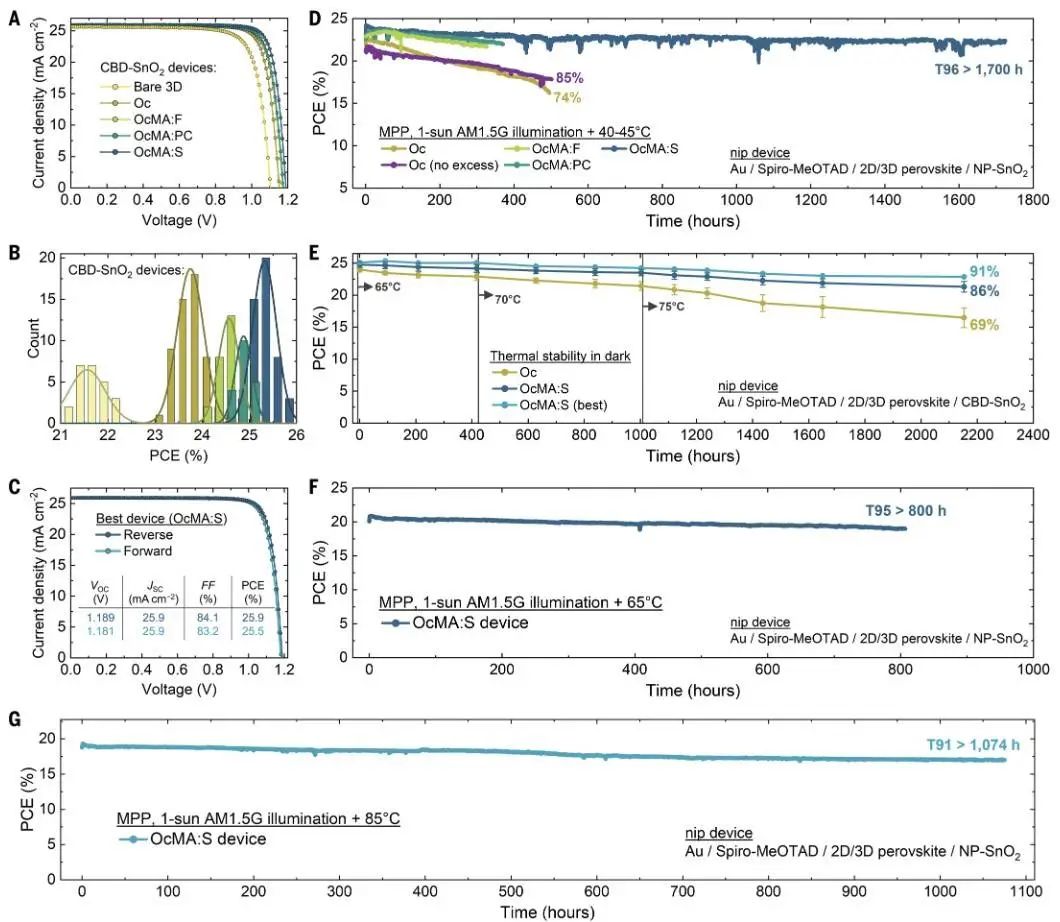
Key Highlights: This paper develops a method for spontaneously forming a highly stable two-dimensional perovskite phase through a mixed solvent strategy, significantly improving the efficiency and durability of perovskite solar cells. The optimized two-dimensional/three-dimensional heterostructure device achieved a power conversion efficiency of 25.9% and retained 91% of its initial performance after 1074 hours of continuous operation at 85°C under maximum power point tracking.
Perovskite solar cells have become a research hotspot in the photovoltaic field due to their high efficiency and low cost, but their long-term stability has hindered their commercialization. In recent years, two-dimensional/three-dimensional (2D/3D) perovskite heterostructures have significantly improved device stability through mechanisms such as surface defect passivation, ion migration suppression, and environmental isolation. However, conventional two-dimensional layers are prone to dynamic phase transitions (such as decomposition into lower-dimensional phases or PbI₂) during device aging, leading to performance degradation. Existing research has focused on the initial optimization of the two-dimensional layer, while ignoring its structural evolution during long-term operation.
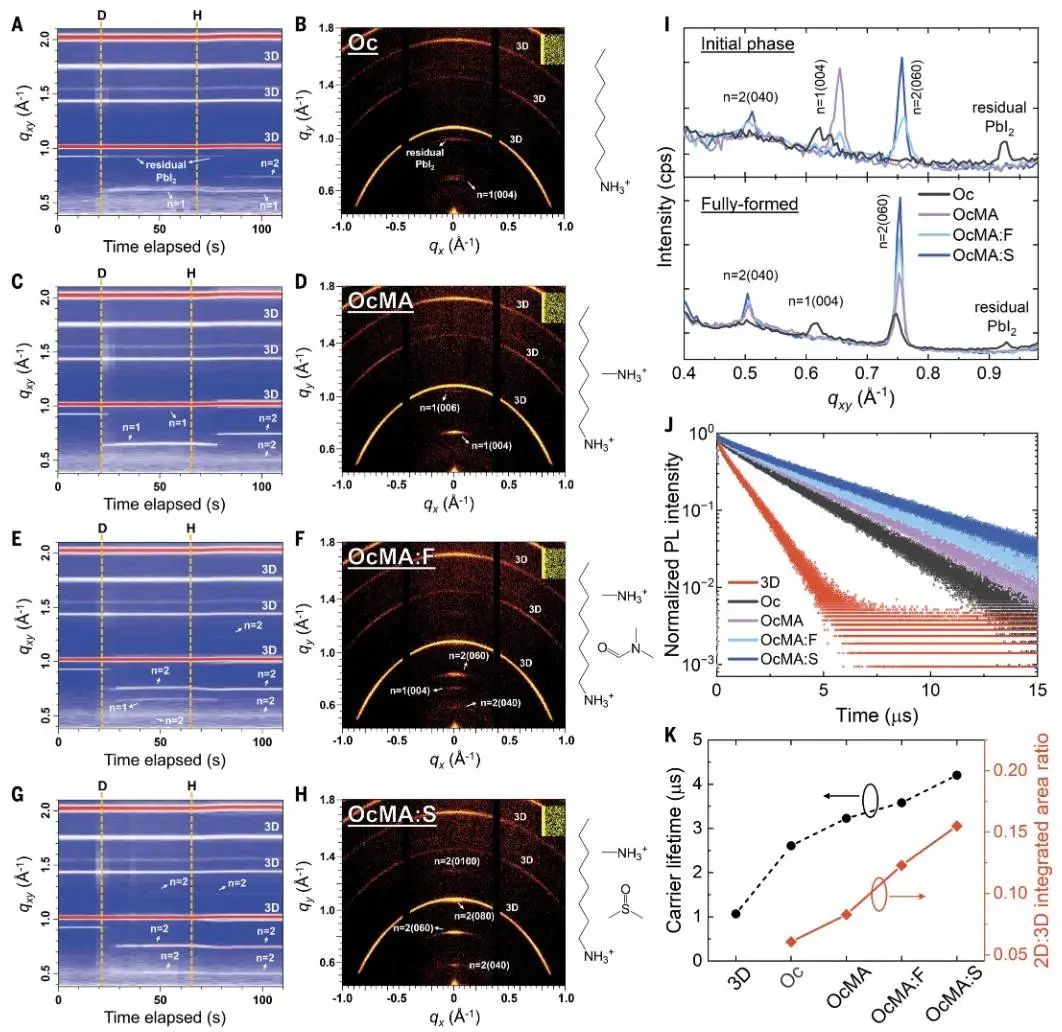
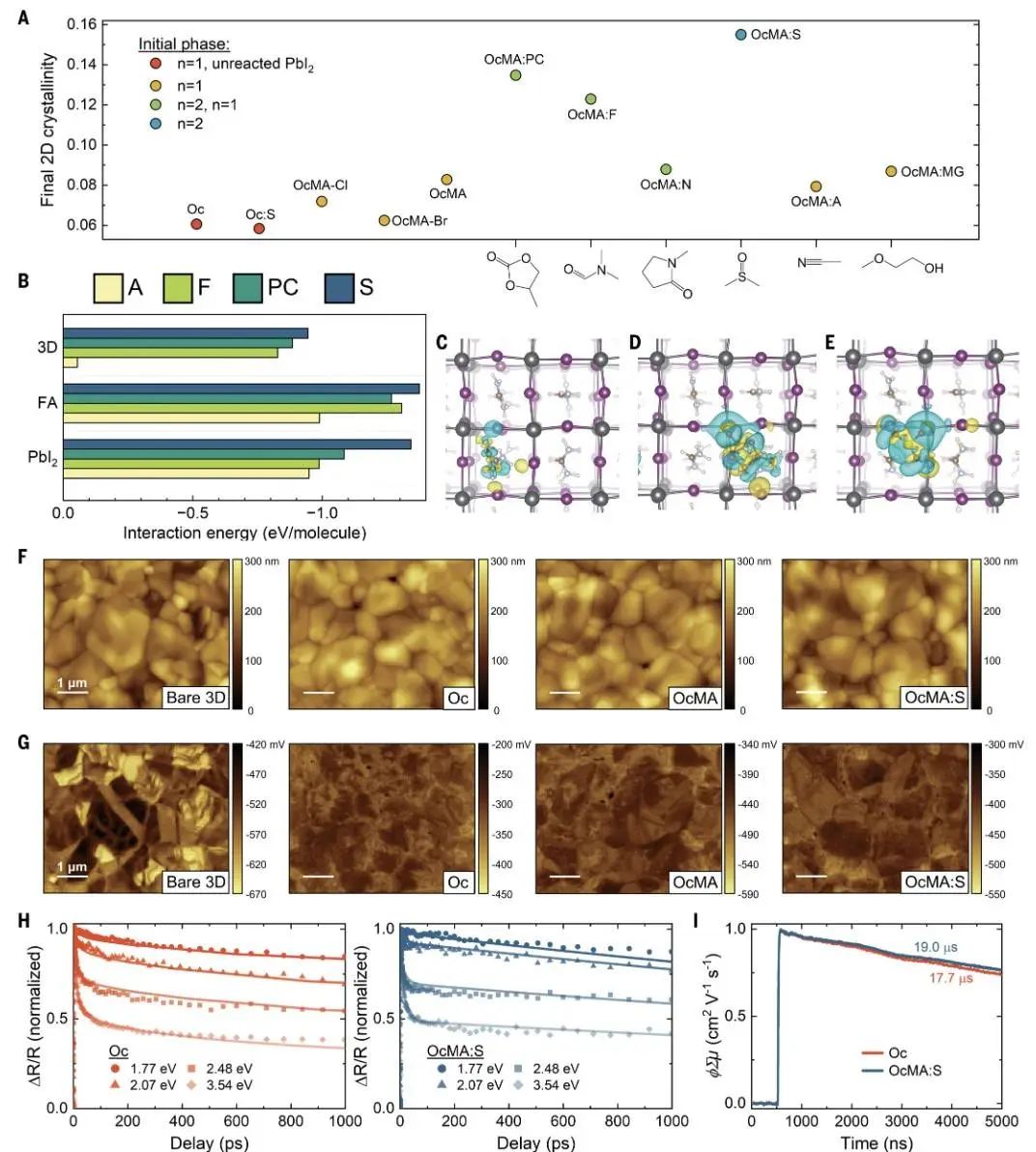
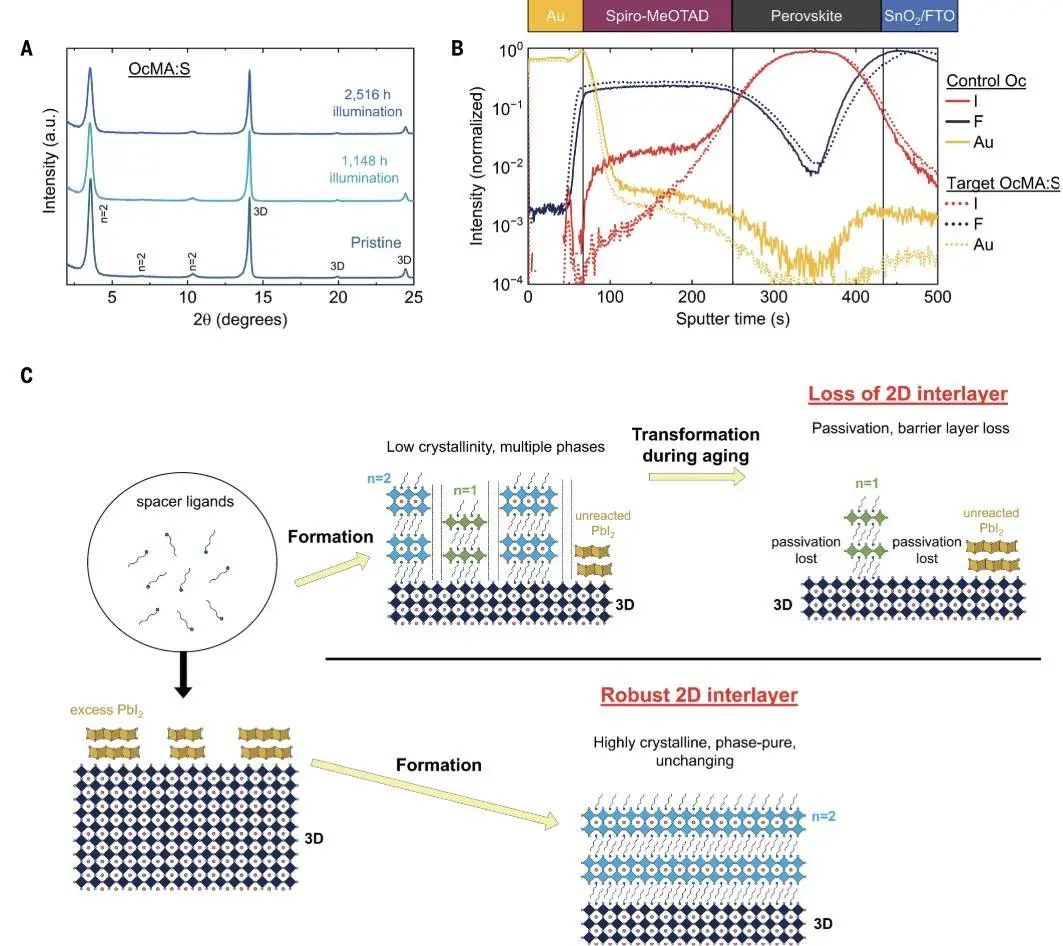
In light of this, Professor Moungi G. Bawendi (2023 Nobel Laureate in Chemistry) of the Department of Chemistry at MIT, in collaboration with Professor Kai Zhu's team at the National Center for Renewable Energy Chemistry and Nanoscience, reported a method for spontaneously forming a highly stable two-dimensional perovskite phase through a mixed solvent strategy, significantly improving the efficiency and durability of perovskite solar cells. The study demonstrated that conventional two-dimensional layers dynamically evolve into lower-dimensional phases or PbI₂ during device aging, leading to defect passivation failure and performance degradation. By introducing a methylammonium (MA) additive and a mixed solvent (such as dimethyl sulfoxide/isopropanol), the crystallization dynamics of the two-dimensional perovskite (n=2) can be precisely controlled, resulting in a high-purity two-dimensional phase free of byproducts (such as unreacted PbI₂ or an n=1 phase). The optimized two-dimensional/three-dimensional heterostructure device achieved a power conversion efficiency of 25.9% and retained 91% of its initial performance after 1074 hours of continuous operation at 85°C under maximum power point tracking.
This study provides a universal method for the synthesis of perovskite materials. It not only solves the stability problem of two-dimensional perovskites, but also provides an important reference for the dynamic stability design of other layered material systems (such as quantum dots and two-dimensional semiconductors).
Source:https://www.science.org/doi/10.1126/science.adr1334