Chen Wei's team at Huazhong University of Science and Technology published a research paper titled "Crosslinker-stabilized quasi-two-dimensional perovskite for solar modules with certified stability" in the journal Joule. Ren Fumeng is the first author, and Pavel A. Troshin, Liu Zonghao, and Chen Wei are co-corresponding authors.
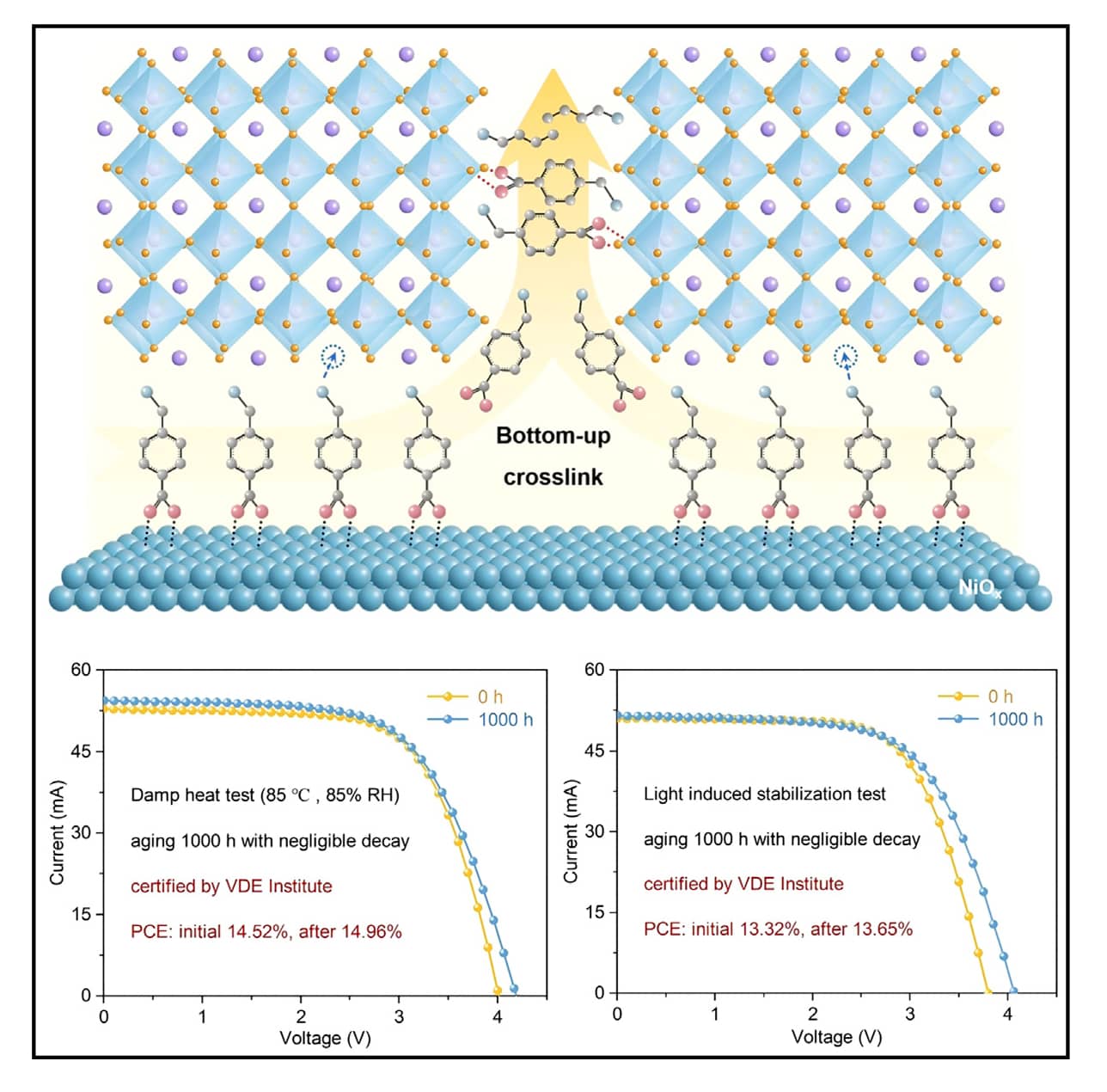
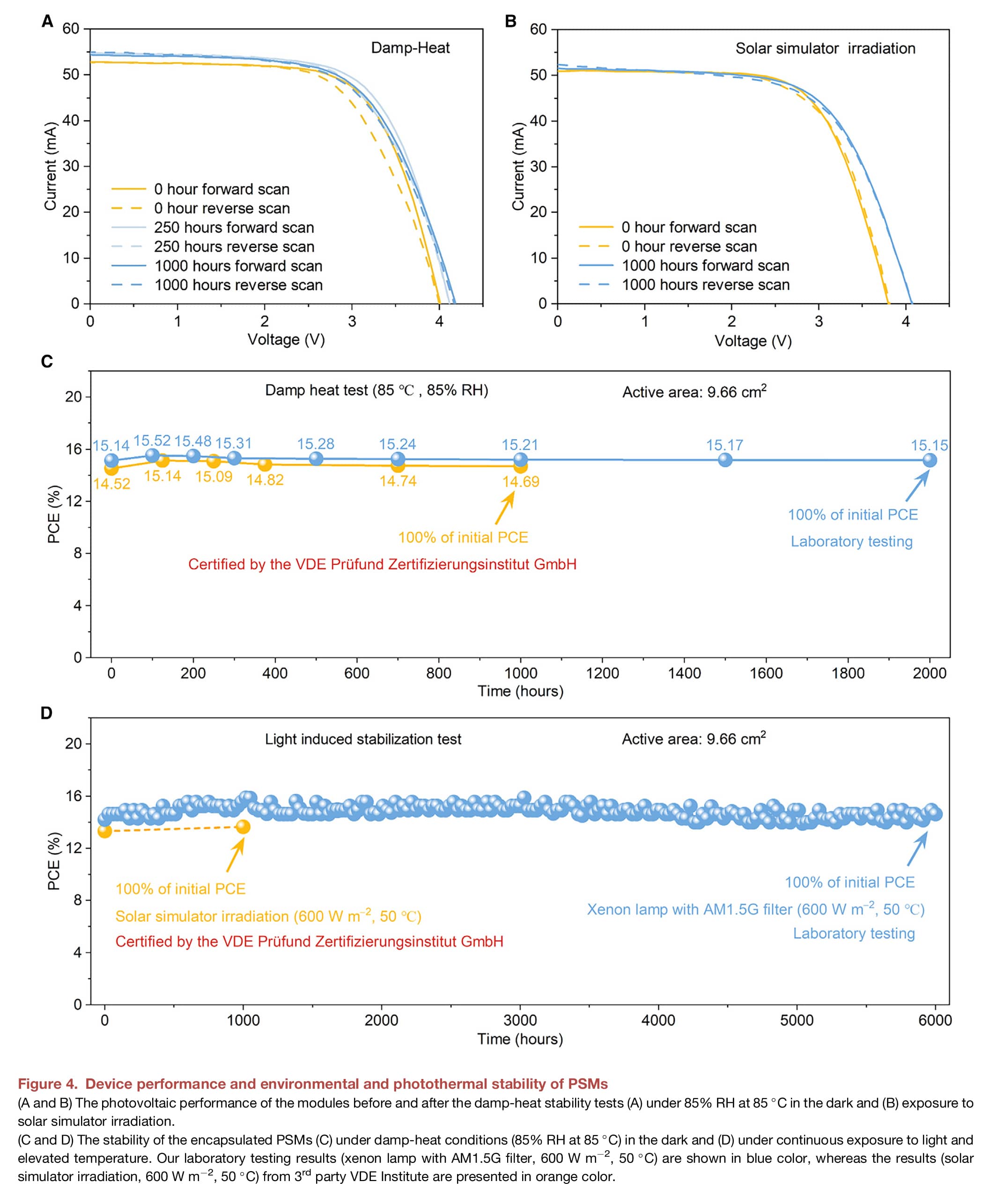
Key Highlight: This paper utilizes 4-(aminomethyl)benzoic acid as a dual-anchor linker for quasi-two-dimensional perovskites, establishing a highly efficient bottom-up crosslinking strategy. Quasi-two-dimensional perovskite solar modules (PSMs) fabricated using this method achieved a peak efficiency of 16.05% at room temperature and humidity with a 9.66 cm² aperture area using a blade coating technique. Furthermore, the PSMs passed the 1000-hour standard damp-heat and operational stability tests validated by the VDE Prüfungs- und Zertifizierungsinstitut GmbH (VDE Institute) with negligible degradation.
Organic-inorganic halide perovskite solar cells (PSCs) are a promising photovoltaic technology due to their high efficiency and low manufacturing cost. Certified small-area single-junction PSCs have achieved power conversion efficiencies (PCEs) exceeding 26%, comparable to those of single-crystalline silicon solar cells. However, scaling perovskite solar cells to the module level while ensuring long-term stability is crucial for their commercialization.
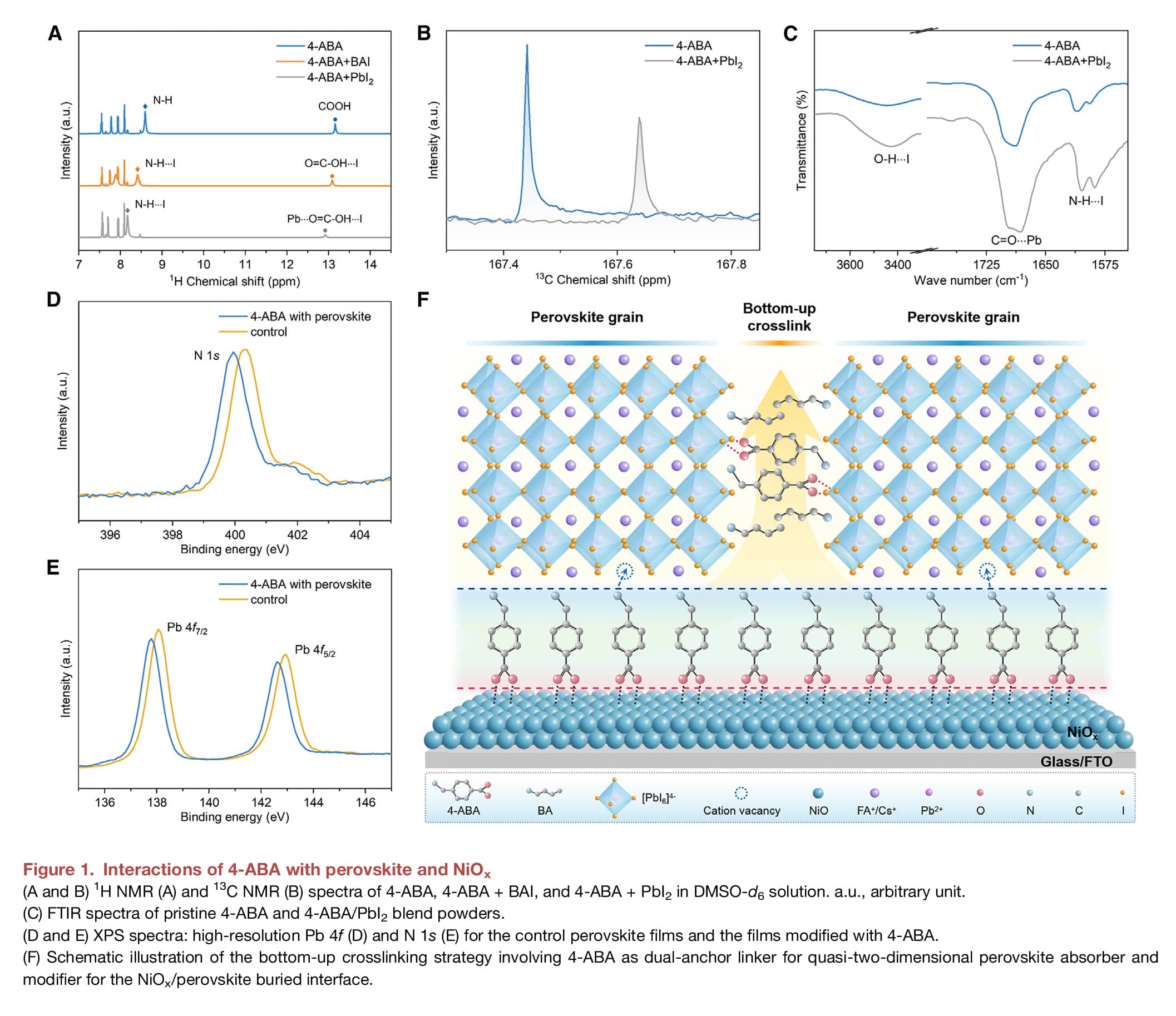
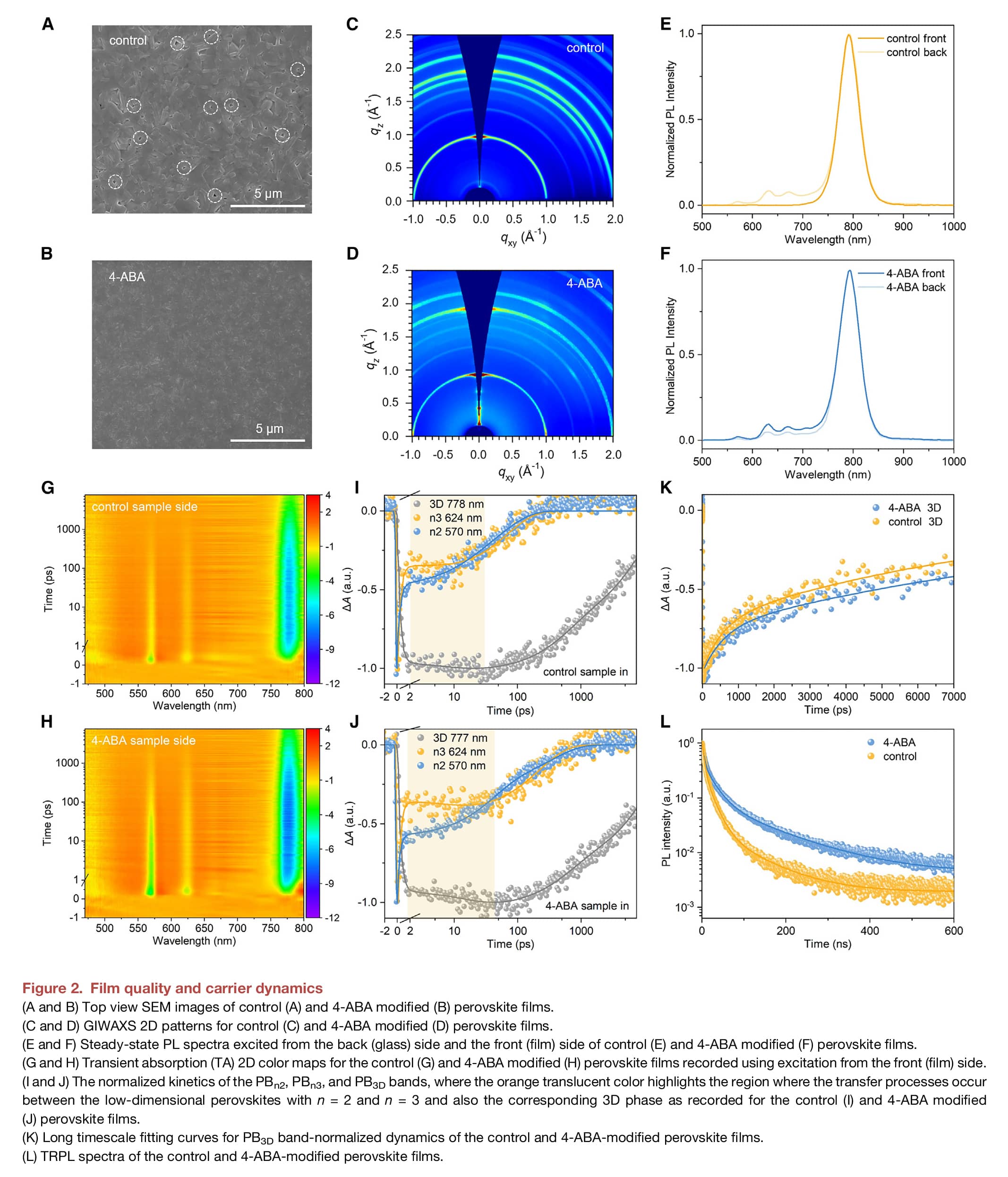
To this end, a team led by Pavel A. Troshin of the Zhengzhou Research Institute of Harbin Institute of Technology, Zonghao Liu, and Wei Chen of Huazhong University of Science and Technology reported a bottom-up cross-linking strategy utilizing 4-(aminomethyl)benzoic acid as a dual-anchor linker integrated into quasi-two-dimensional (2D) perovskites to reduce the weak van der Waals gap between individual 3D perovskite layers and functionalize the NiOx/perovskite interface. This approach not only enhances the coupling between perovskite flakes within the quasi-2D structure, improving stability, but also promotes the vertical growth of highly ordered, phase-pure low-dimensional perovskite films, thereby improving carrier transport. Quasi-two-dimensional perovskite solar modules (PSMs) fabricated using this method achieved a peak efficiency of 16.05% at room temperature and humidity with an aperture area of 9.66 cm², utilizing a blade coating technique. Furthermore, the PSMs passed 1000 hours of standard damp heat and operational stability testing validated by the VDE Prüfungs- und Zertifizierungsinstitut GmbH (VDE Institute) with negligible degradation.
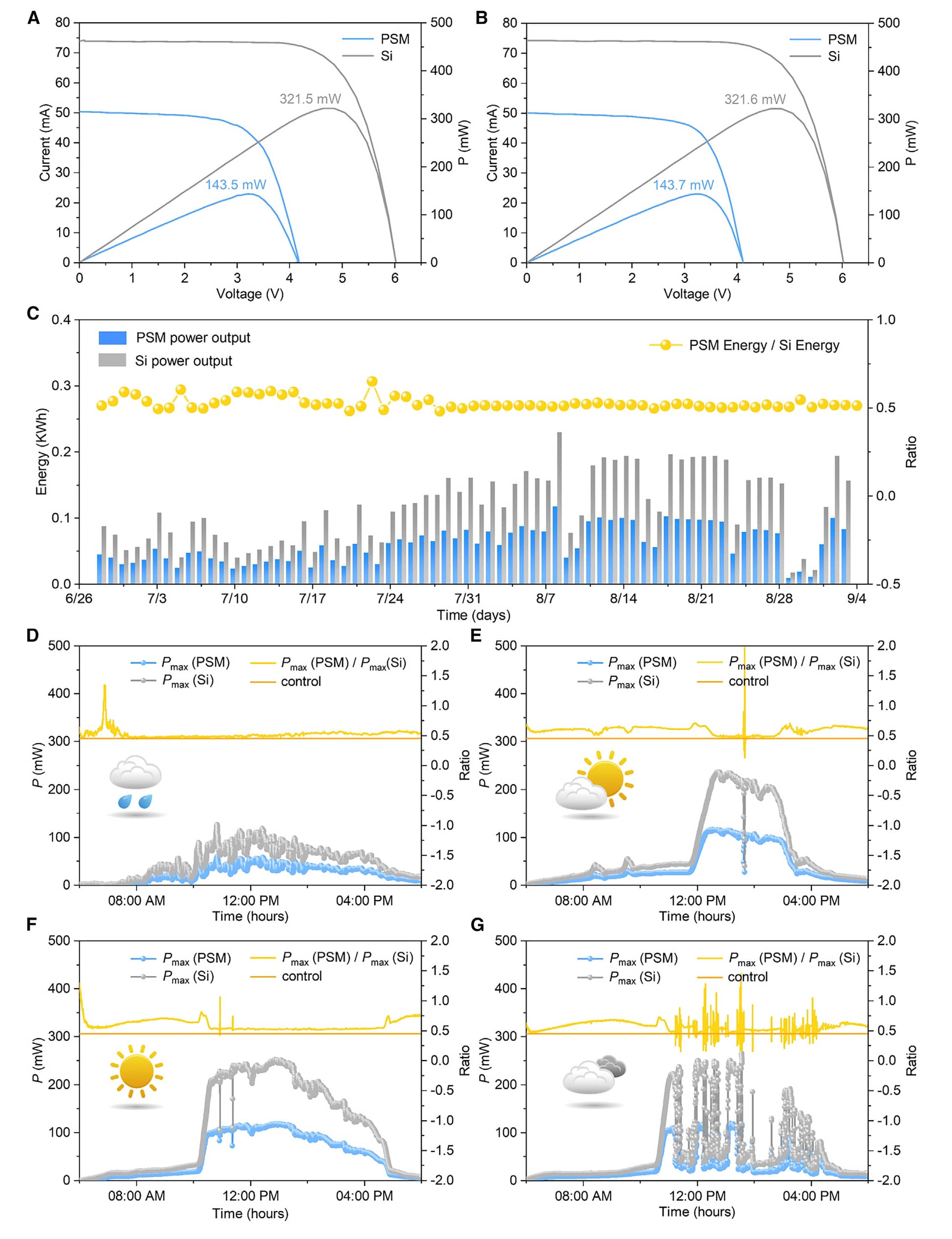
This research represents a significant step forward in the development of PSCs with the long-term operational stability required for real-world outdoor solar panel applications. The research calls for extensive and rigorous certification of device stability within the industry to accelerate the commercialization of PSCs.
Source:
DOI: 10.1016/j.joule.2024.11.010
https://doi.org/10.1016/j.joule.2024.11.010