Perovskite solar cells suffer from interface defects and interlayer thermal expansion coefficient mismatches that severely limit their photoelectric conversion efficiency and stability under mechanical stress.
To address this issue, research teams from the University of the Chinese Academy of Sciences, King Abdullah University of Science and Technology, and Hainan University collaborated to introduce the linear polymer heparin sodium (HS) as a multifunctional interface bridging layer for n-i-p type perovskite solar cells. Unlike commonly used small molecule interface modification materials, HS has densely distributed functional groups such as carboxylates (COO⁻), sulfonates (SO₃⁻), and sodium ions (Na⁺) on both sides of its backbone. This material chemically bridges the SnO₂ electron transport layer and the perovskite film, significantly reducing the interface defect density and strengthening the heterojunction interface. Rigid devices fabricated using this material achieved a power conversion efficiency of 26.61% (certified efficiency 26.54%); flexible SnO₂/HS devices also achieved a PCE of 25.23%. In terms of stability, the HS device maintained 94.9% of its initial efficiency after 1,800 hours of continuous operation under simulated standard sunlight. After 1,800 hours of high-temperature aging at 85°C, the efficiency retention rate reached 95.2%, demonstrating excellent operational and thermal stability.
Paper link:
https://www.nature.com/articles/s41566-025-01676-3
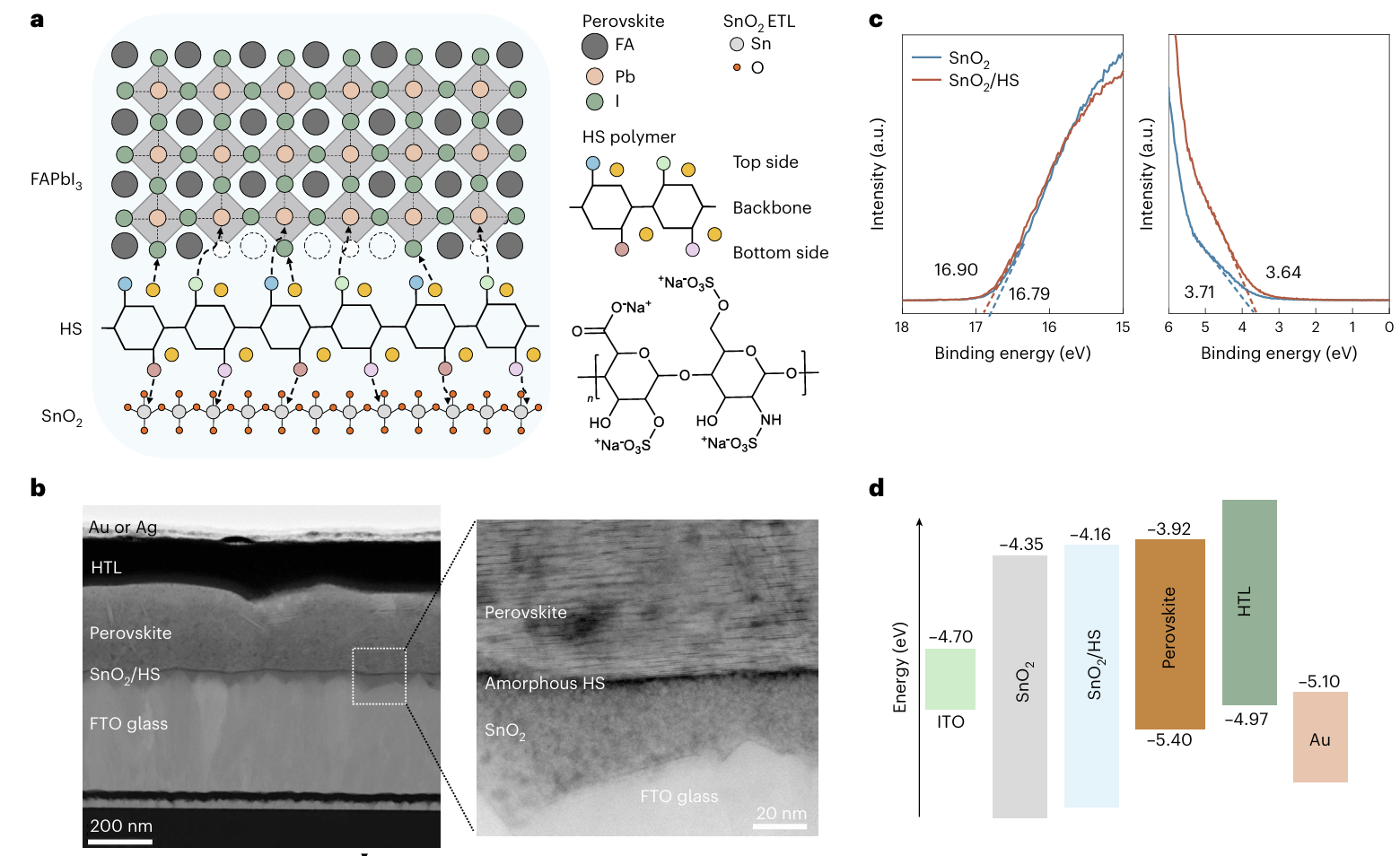
图1,HS修饰的电子传输层表征
图2,HS对钙钛矿性质的影响
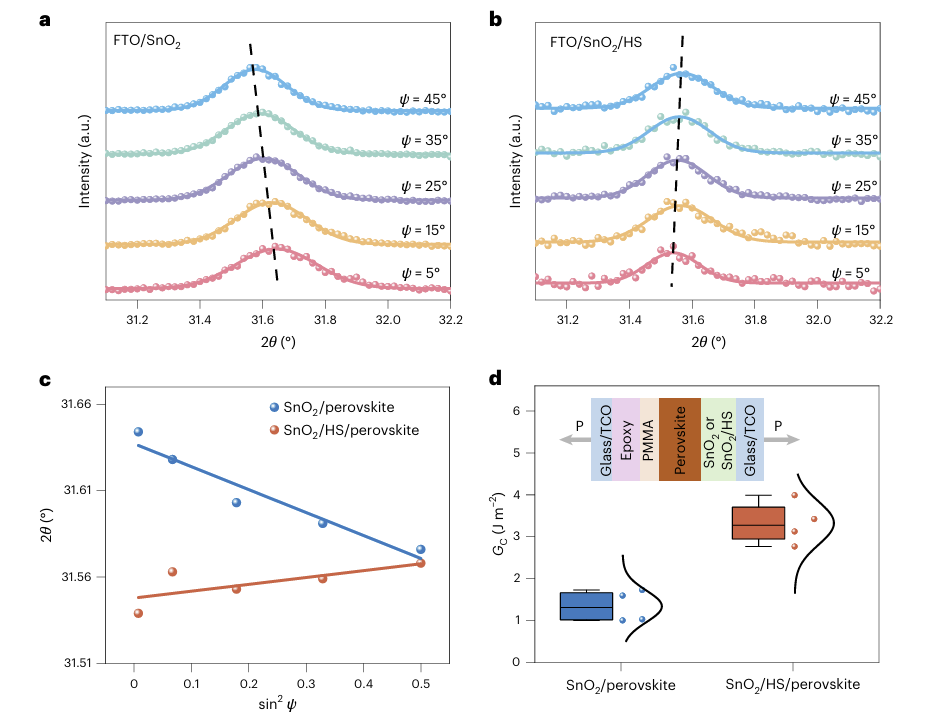
图3,HS处理的钙钛矿异质界面机械性能表征
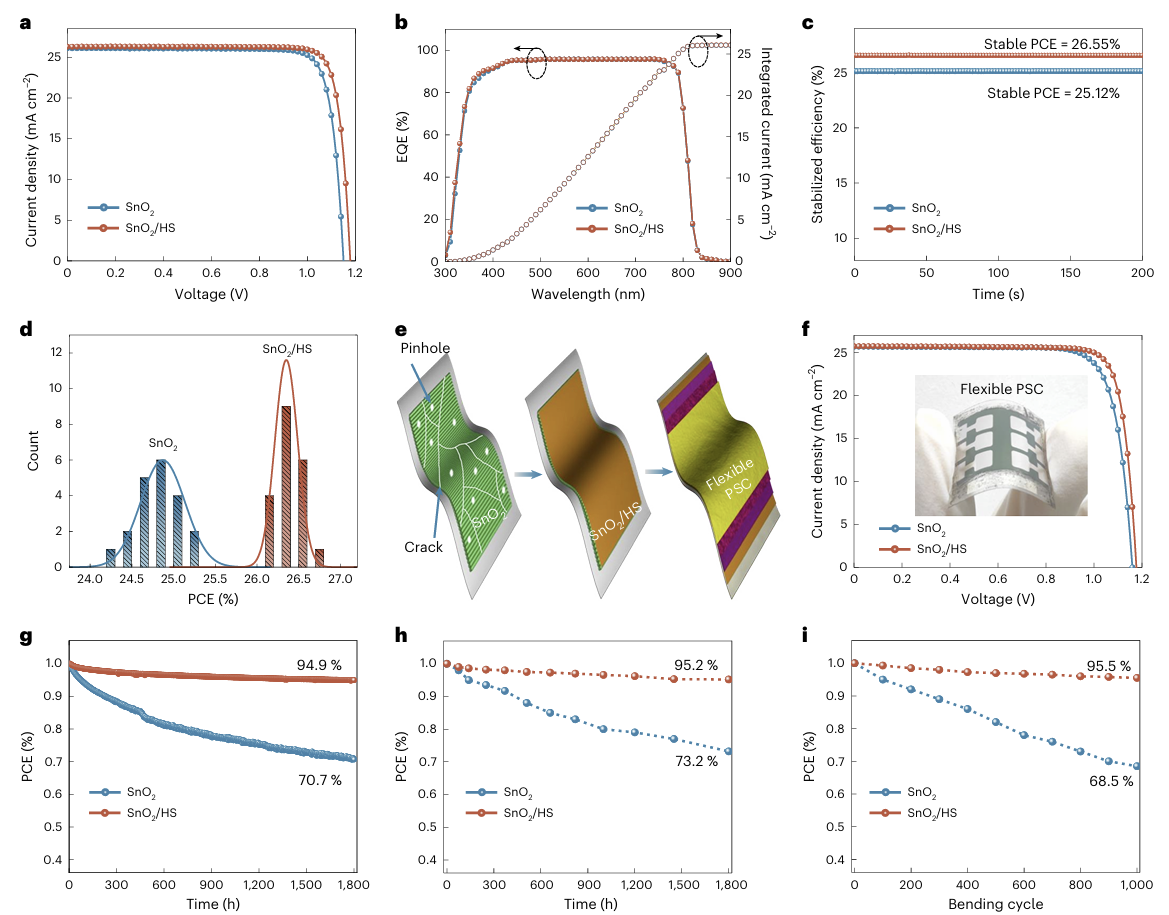
图5,柔性及刚性钙钛矿太阳能电池的效率及稳定性